How heat pumps work
A heat pump collects heat present in the air, ground or water to warm your home. Rather than burning fuel in your home, it uses electricity to move heat and raise its temperature. This allows it to deliver more heat energy than the electricity it uses.
In this article, you will learn how the process works and how heat pump technology provide energy-efficient heating all year round.
In brief:
- From natural heat to home comfort. A heat pump collects heat from the air, ground or water and raises it to a temperature suitable for heating and hot water.
- Efficient use of energy. Electricity powers the heat pump, but much of the heat comes from the surrounding air, ground or water. This allows the system to deliver more heat energy than the electricity it consumes.
- More then heating. Many heat pump systems also provide hot water as well as cooling, depending on type and installation.
Moving heat into your home
Heat is already present in outdoor air, the ground, lakes and the ventilation air leaving your home. Even cold outdoor air contains heat. The challenge is that its temperature is usually too low to warm your rooms or provide hot water directly.
A heat pump collects this heat and uses electricity to raise its temperature. This makes heat from a relatively cool source suitable for warming your home and, depending on the system, producing hot water. The process puts existing energy to work without burning fuel in your home.
Water-based systems deliver the heat through radiators or underfloor heating and supply heat for the hot water used in showers and taps. Air-to-air heat pumps deliver warmth directly to room air through one or more indoor units.
The heating cycle in four steps
The heat source differs between systems, but the process inside the heat pump follows the same basic principle. A refrigerant circulates in a closed circuit, carrying heat from the source towards the home’s heating system or indoor air.
As the refrigerant absorbs heat, it changes from liquid to gas. An electrically powered compressor raises the gas temperature so that the heat is ready to be delivered indoors.
The refrigerant then releases its heat and returns to liquid form. It continues through the circuit, ready to collect heat again. The following four steps explain how the cycle works.
The process step by step
-
- Step 1: Heat is collected. The refrigerant absorbs heat from the source through a heat exchanger and evaporates into a gas. Depending on the system, the heat comes from air or is carried to the heat pump by fluid circulating through a collector.
- Step 2: The temperature rises. An electrically powered compressor raises the refrigerant gas temperature, making the heat suitable for warming your home.
- Step 3: Heat is delivered indoors. The refrigerant releases heat through another heat exchanger to water or directly to indoor air. In water-based systems, heat supplies radiators or underfloor heating and is also used for domestic hot water production.
- Step 4: The cycle begins again. The refrigerant returns to a lower temperature and is ready to absorb heat from the source again. It continues around the closed circuit, repeating the process.
Different heat pumps for different homes
Heat pumps share the same basic operating principle. The main differences are where they collect heat and how they deliver it indoors. Your home’s heating system, ventilation and available outdoor space influence which type is suitable.
Ground source heat pump
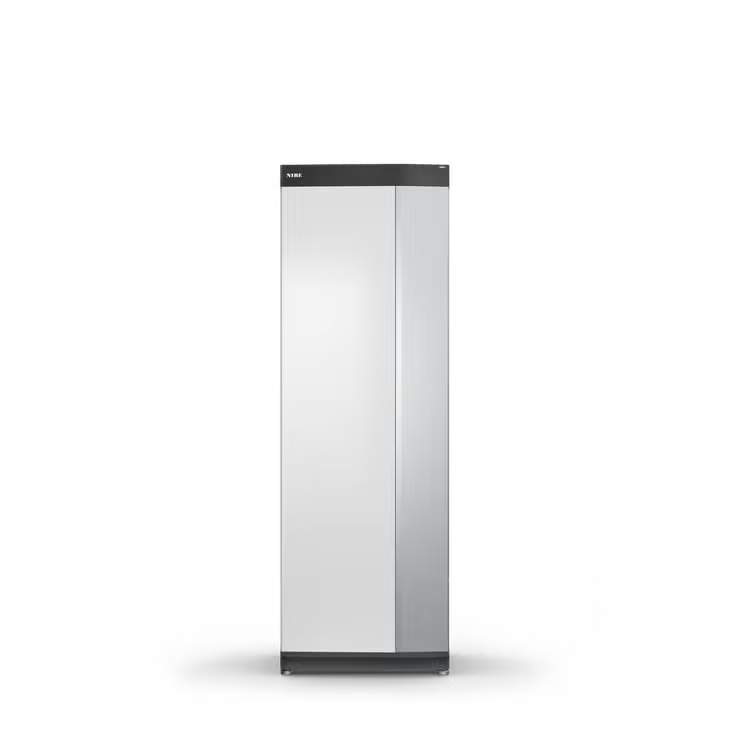
A ground source heat pump collects renewable heat through a loop installed in a borehole, horizontal ground trenches or a suitable lake. The collector carries heat to an indoor heat pump, which supplies water-based heating and domestic hot water.
Suitable for: Homes with water-based heating and a suitable site for a collector, including properties with higher heating demand.
Air-to-water heat pump
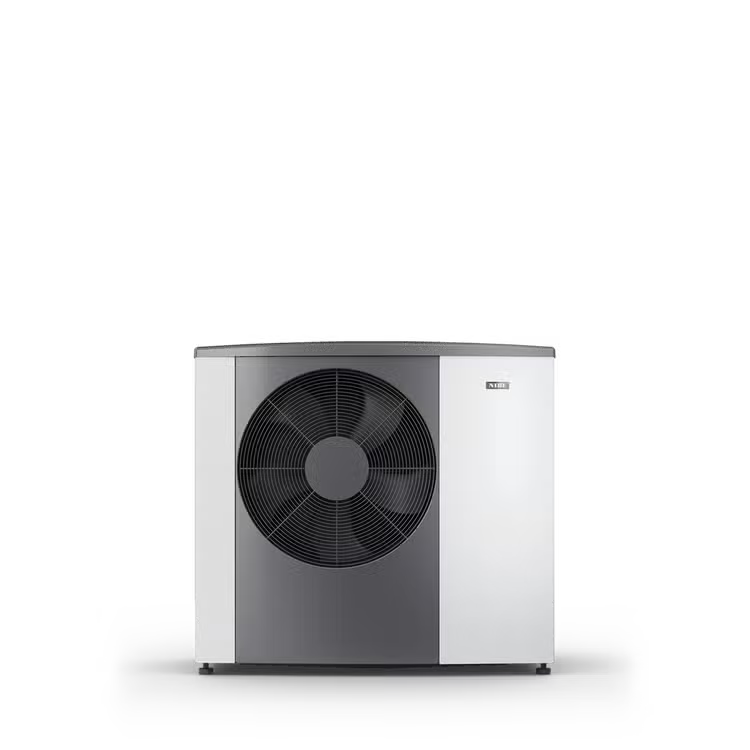
An air-to-water heat pump collects heat from outdoor air and transfers it to water for radiators, underfloor heating and domestic hot water production. It uses an outdoor unit, with no need for a borehole or buried ground collector.
Suitable for: Homes with water-based heating, or where it is being installed, and space for a suitably positioned outdoor unit.
Exhaust air heat pump
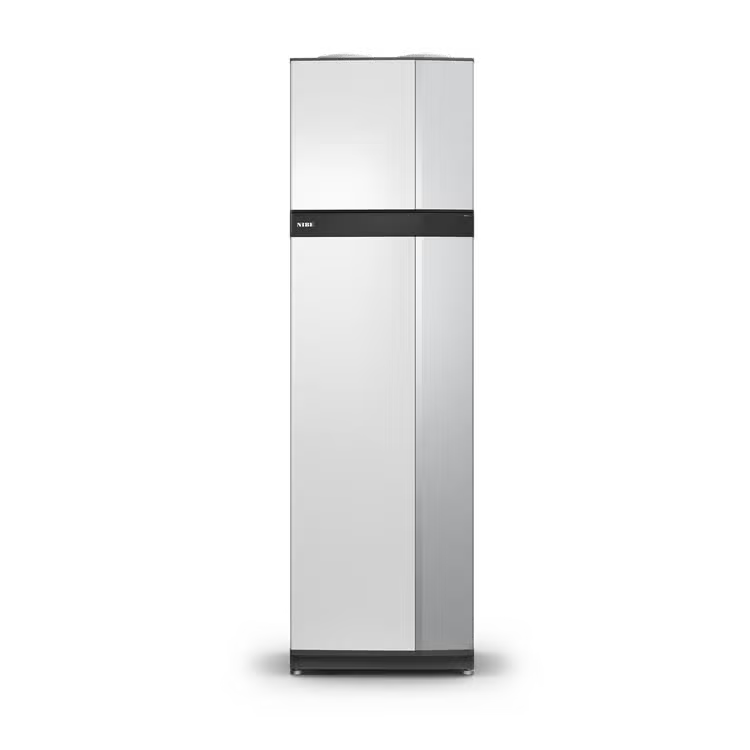
An exhaust air heat pump recovers heat from warm ventilation air leaving the home. It uses this energy for water-based heating and domestic hot water, combining heating, hot water and mechanical ventilation in one indoor unit.
Suitable for: Well-insulated homes with compatible mechanical extract ventilation and water-based heating, including new builds and replacements of existing exhaust air systems.
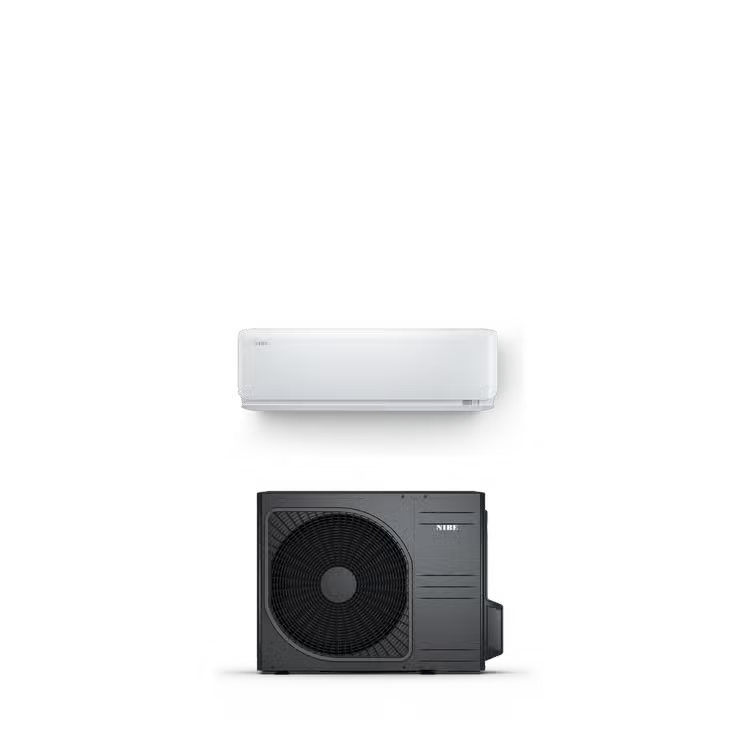
Air-to-air heat pump
An air-to-air heat pump collects heat from outdoor air and delivers it directly to room air through one or more indoor units. It also provides air conditioning by transferring heat outdoors. Domestic hot water requires a separate system.
Suitable for: Homes with direct electric heating and relatively open layouts that allow air to circulate between rooms, or where supplementary heating and cooling are needed.
More than just heating
Many heat pumps can do more than simply heat your home. Most models also produce hot water, and some can provide cooling during the summer months.
Many modern heat pumps also include smart features that help optimise energy use. These may include app-based control that allows you to monitor and adjust system settings remotely, as well as functions that adapt heating performance to your home's needs, weather conditions, or current electricity prices. Some systems can also use sensors throughout the home to create a more consistent and comfortable indoor climate.
Inverter-controlled heat pump
- Modern heat pumps have an inverter-controlled compressor. This means that the compressor can adjust its output to match the amount of heat the house needs. The result is a more even indoor temperature, high energy efficiency and a longer service life for the heat pump.

Cooling
Some heat pumps can lower temperature in your home during warm summer days, either through passive or active cooling.

NIBE Sense
NIBE Sense brings together intelligent functions and services around your heat pump. These use information about your home and surrounding conditions to adjust operation to your household’s needs.
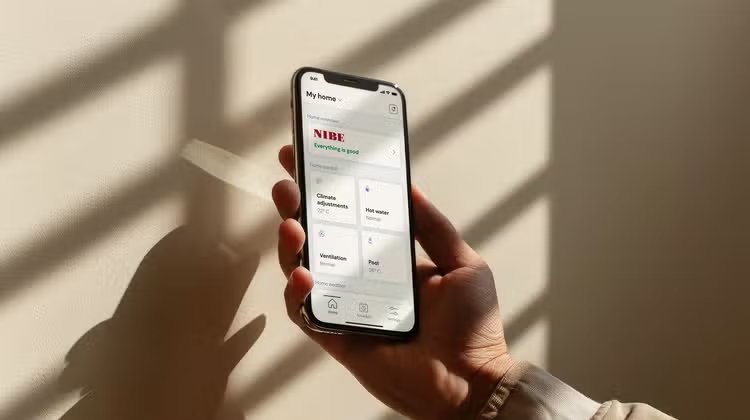
myUplink
myUplink app is part of NIBE Sense, giving you an overview of your connected heat pump and access to its settings from your phone. Monitor operation and make adjustments as your plans change.
COP explained
- COP stands for Coefficient of Performance. It compares heat output with electricity input under stated operating conditions. A COP of 4 means that 1 kWh of electricity delivers 4 kWh of heat. The additional heat comes from the surroundings.
SCOP explained
- SCOP stands for Seasonal Coefficient of Performance. It is a standardised measure of heating efficiency across a heating season, accounting for varying temperatures and demand. Compare values for the same climate profile and, for water-based systems, the same flow temperature. Your home’s actual electricity use also depends on its heating demand, the installation and the settings.