Floating high tech-house with unique sea heat
A NIBE ground source solution using the surrounding seawater
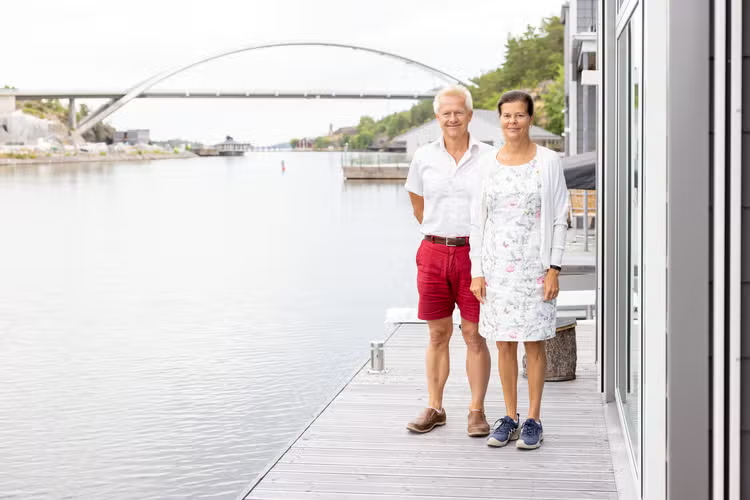
A floating home in Stockholm uses the surrounding seawater as a heat source for heating and passive cooling. A NIBE ground source heat pump, combined with collector pipes integrated into the concrete pontoon, helps provide a comfortable indoor climate throughout the year.
Stefan Fölster and Catharina Barkman wanted the best of both worlds: a home close to Stockholm with the feeling of a summer house by the water. They found it in Svindersvik, where their home is one of around 30 permanently moored houses.
Their 210 m² home was built in Västervik and transported to Stockholm by barge. With two floors, large windows and a 100 m² roof terrace, the house makes the most of its waterfront setting and the views across the water, forest and Stockholm beyond.
Living directly on the water also raised plenty of questions. Everything from moisture and waves to heating and cooling had to be considered to create the comfortable year-round home Stefan and Catharina had imagined.
Location: Svindersvik, Stockholm, Sweden.
Heating system: NIBE ground source heat pump with underfloor heating, passive cooling and ventilation.
Heat source: Collector pipes integrated into the concrete pontoon and exchanging heat with the surrounding seawater.
Result: Connected service with myUplink and approximately 13,000 kWh during the first recorded year, including household electricity.
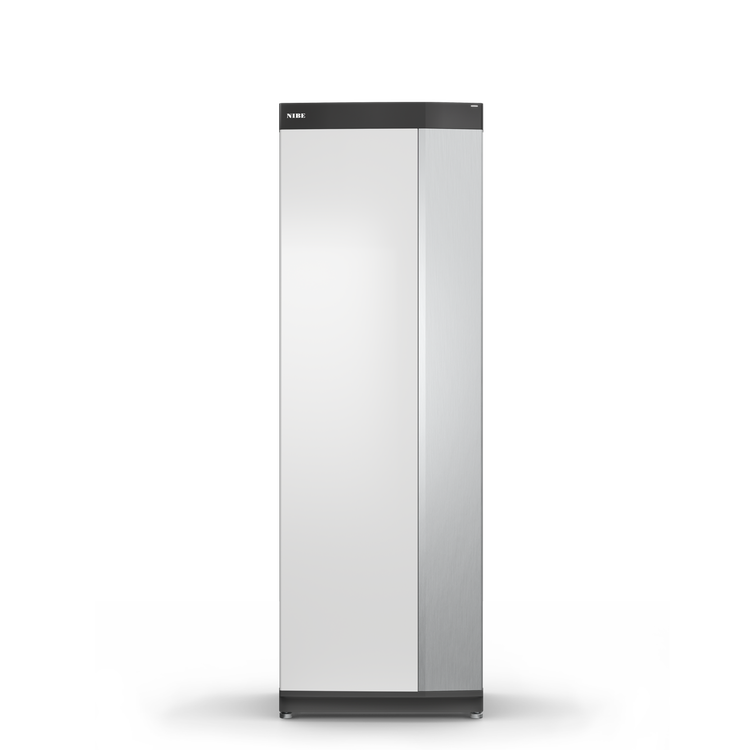
Ground source heat pump
S1255
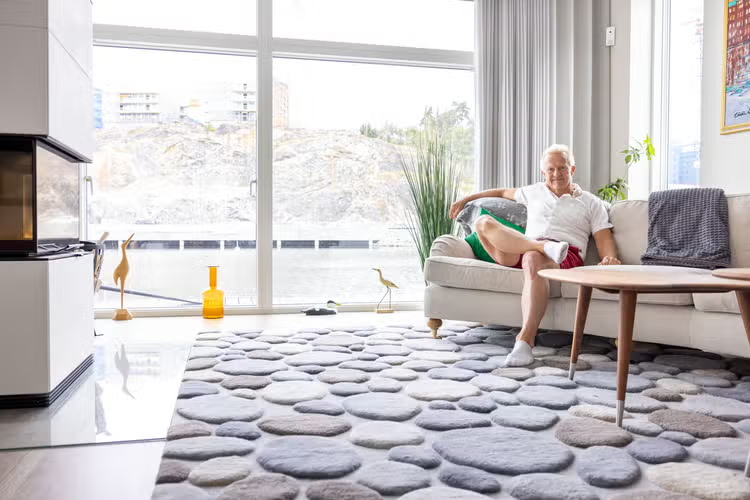
Creating a comfortable home directly on the water
A floating home has the same comfort requirements as any permanent residence, but its location and construction create different technical conditions.
For the owners, a comfortable indoor climate throughout the year was central. Heating was needed during Stockholm's colder months, while the large windows and exposed position also made effective cooling important during summer.
Moisture and ventilation were additional considerations when planning a permanent home surrounded by water. The solution therefore needed to manage more than heating alone and work together with the building's ventilation and cooling.
At the same time, a conventional ground source installation with a borehole was not the natural solution for a house built on a concrete pontoon. The challenge was to use the conditions of the site rather than work against them.
The Aqua Floating Group has been doing marine development for over 50 years.
"During the 2000s, almost 50 floating buildings were delivered, the majority of which are energy-efficient, comfortable single-family homes on 2–3 levels. A majority of them have been successfully equipped with a collector hose in the floating structure connected to NIBE’s ground-source heat pump. Our company is proud to have this stable type of environmentally friendly, high-efficiency energy extraction from sea heat. It's a self-patented solution that we are highly praised for.
Planning is currently also under way for apartment blocks, semi-detached homes and restaurants, where everyone involved is curious and keen on our NIBE solution. In Västervik, we’re now building a unique new house factory that will give us ten times more delivery capacity that can deliver efficiently both over land and water. We have a significantly increased inflow of prospects, so both we and NIBE have reason to focus on customers in the years to come!"
- Johan Olofsson, VD Aqua Floating Group
Using the surrounding seawater as the heat source
The solution combines a NIBE ground source heat pump with collector pipes integrated into the bottom of the home's concrete pontoon.
Instead of extracting heat through a conventional borehole, the collector exchanges heat with the surrounding seawater. Integrating the pipes into the pontoon also protects the collector and makes it part of the building itself.
Inside the home, the NIBE system supplies underfloor heating and works together with the ventilation system. During warmer periods, the installation also uses the lower temperature available from the heat source to provide passive cooling.
Cooling is distributed in three ways: through the underfloor system, through fan convectors in selected rooms and through a cooling coil connected to the ventilation system. This allows cooling to reach different parts of the home while using the same overall energy system.
The heat pump is also connected to myUplink, giving the owners remote access to the system. They can monitor operation and adjust settings even when they are away from the house.
The result is one integrated solution designed around the particular conditions of a floating home rather than adapting a conventional installation to an unconventional building.
Year-round comfort with low energy use
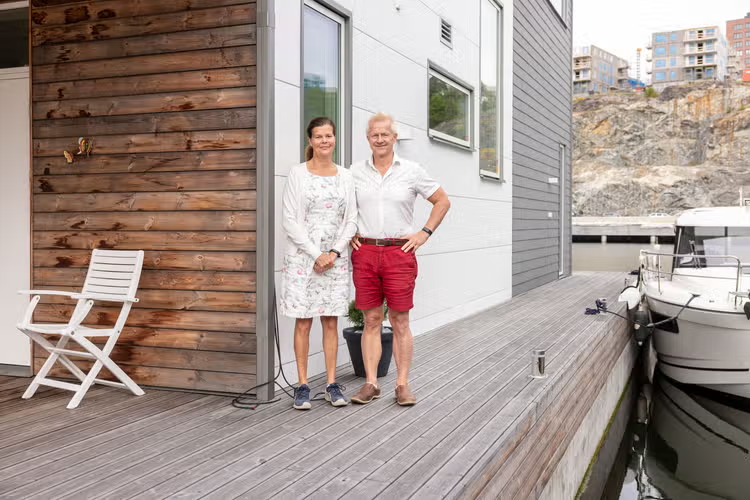
The owners describe a home that stays warm and well ventilated during colder periods and comfortable when outdoor temperatures rise.
The concerns around moisture have not become an issue in everyday use, while passive cooling has become an important part of maintaining the indoor climate during summer. The combination of underfloor cooling, fan convectors and ventilation gives the system several ways to manage warmer conditions.
During the first recorded year, the 210 m² home used approximately 13,000 kWh in total, including household electricity. Because the figure includes all household electricity, it provides a useful picture of the property's overall energy use rather than only the heat pump.
myUplink also gives the owners continued visibility of the system when they are away, adding remote monitoring and control to the heating and cooling solution.
The project shows how a NIBE ground source heat pump can be adapted to unusual building conditions and use the surrounding environment as part of an integrated solution for heating and cooling.