Combining solar panels with a heat pump
In brief:
- Solar panels generate electricity for your heat pump. It can use the electricity to provide heating and hot water.
- Smart controls adapt the heat pump’s operation to solar production. The heat pump can adjust its operation based on how much electricity the panels generate.
- Surplus solar electricity can be used for heating. For example, the heat pump can prioritise hot water when more self-generated electricity is available.
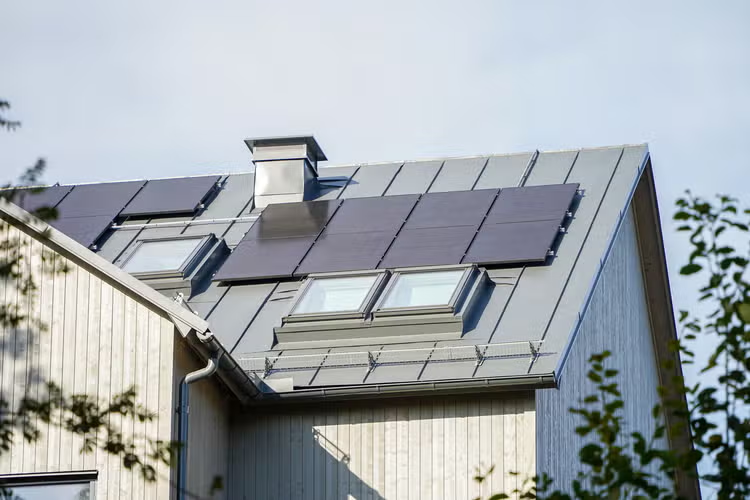
How solar panels and a heat pump work together
Solar panels convert sunlight into electricity. They generate direct current, which an inverter converts into alternating current that can be used in the house.
The electricity generated by your solar panels is primarily used where there is demand in the home. This could be household appliances or the electricity your heat pump uses to provide heating and hot water. If the solar panels generate more electricity than the house uses, a surplus is created that would otherwise be exported to the grid. This is where combining solar panels with a heat pump can be particularly useful.
Make better use of your solar electricity with a NIBE heat pump
NIBE’s control system uses information about solar production to adapt the heat pump’s operation. When the solar panels generate more electricity than the house uses, more of that energy can be used for heating and hot water.
Adapts operation to solar production
Solar production varies throughout the day and is often at its highest when the house's overall electricity consumption is relatively low. The heat pump can then shift some of its energy use to periods when self-generated electricity is available.
Prioritises hot water production
When there is plenty of solar electricity available, the heat pump can prioritise hot water production. The electricity is then used to heat water that can be used later, for example for showers and baths.
Uses surplus electricity for heating
Surplus electricity from the solar panels can also be used for heating, within the temperature limits set for the house. This allows the energy to be used as heat instead of all the surplus electricity being exported to the grid.

More ways to use your solar electricity
A NIBE heat pump can use self-generated solar electricity for more than heating and hot water. Depending on the system setup, the energy can also be used for functions such as pool heating and cooling.
If you have a pool, a compatible NIBE ground source or air/water heat pump can be used to heat it. This can work particularly well because the need for pool heating often coincides with periods of high solar production.
Cooling can also be useful in summer. Depending on the heat pump and system setup, the heat pump can help keep your home cool during the same period when the solar panels are generating the most electricity.

Smarter energy with NIBE Sense
NIBE Sense is the intelligence in NIBE’s connected heat pumps, helping the system automatically adapt operation to the house and conditions that affect energy use.
Together with a compatible solar system, the heat pump can take solar production into account and use more self-generated electricity for heating and hot water. With features such as Smart Price Adaption, the system can also adapt its operation to changes in electricity prices.

Monitor your system with myUplink
With myUplink, you can monitor your NIBE heat pump directly from your smartphone. You can track system performance, view temperatures and energy consumption, and control functions and settings remotely.
Depending on your system and connected products, you can also monitor how different parts of your energy system work together and get a clearer overview of your home's energy use.
Do you already have a NIBE heat pump?
If you already have a compatible NIBE heat pump, it can be combined with solar panels and smart controls. The options available depend on your heat pump, control system and solar installation.
A NIBE installer can assess your existing system and help you find out what options are available.
If you are planning to install both a new heat pump and solar panels, it is a good idea to consider the whole system from the start. This allows the systems to be sized and configured to work together and use the electricity you generate where it is useful in your home.