How exhaust air heat pumps work
In brief:
- Recovers heat from outgoing air. Energy in the home’s ventilation air is reused for heating and hot water.
- Raises the temperature through compression. An electrically powered compressor makes the recovered heat suitable for the water-based system.
- Combines three functions indoors. Heating, hot water and ventilation are integrated in one unit, with no outdoor heat pump unit.

Heating and ventilation in one system
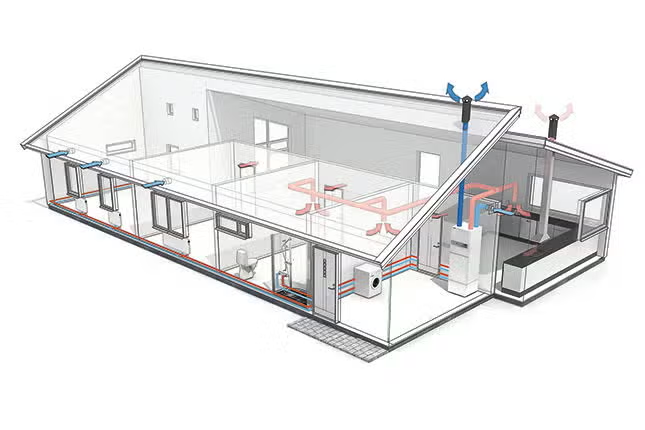
Your home needs a regular supply of fresh air. The indoor air being replaced has already been warmed, and an exhaust air heat pump recovers its heat before it leaves the building.
A fan draws air through ventilation ducts from rooms such as bathrooms, kitchens and utility rooms. Fresh outdoor air enters through wall vents or a supply air system, depending on the ventilation design.
The recovered heat supplies the home’s water-based heating system and hot water cylinder. Radiators or underfloor heating distribute warmth throughout the rooms, while domestic hot water is available for showers and taps.
Heating, hot water and ventilation are coordinated through the system’s controls. The heat pump is installed indoors, with no outdoor heat pump unit, borehole or buried ground collector.
Because the heat source is the air already inside the home, the entire system is installed indoors and does not require an outdoor unit. The amount of heat available depends on the airflow and temperature of the extracted air, so the heat pump may use additional energy when the home needs more heating or hot water.
Putting recovered heat to work
The air leaving your home contains thermal energy. Inside the heat pump, a refrigerant absorbs this heat and carries it through a closed circuit. An electrically powered compressor raises its temperature so that heat is ready to be transferred to water.
Because the source air has been warmed indoors, its temperature is relatively stable compared with outdoor winter air. Heat is available for recovery throughout the year, including summer when your home still needs hot water.
Inverter-controlled models adjust compressor output to match heating and hot water demand.
The process step by step
-
Step 1: Warm indoor air is collected. A fan draws air through the ventilation ducts to the heat pump. Fresh outdoor air replaces the air leaving your home.
- Step 2: Heat is recovered. The air passes over a heat exchanger. A refrigerant absorbs its heat and evaporates into a gas. The cooled ventilation air is then discharged outdoors.
- Step 3: The temperature rises. An electrically powered compressor raises the refrigerant’s temperature so that the heat is suitable for heating and hot water.
- Step 4: Heat returns to your home. A second heat exchanger transfers heat to water for space heating and hot water production. The refrigerant continues through the closed circuit, and the process repeats.
Where exhaust air heating works best
Exhaust air heat pumps are particularly well suited to well-insulated homes with mechanical extract ventilation and water-based heating. They bring together three functions the home needs and are used in both new builds and replacements of existing exhaust air systems.
An exhaust air heat pump is worth considering if you:
- Already have an exhaust air heat pump to replace
- Have compatible mechanical extract ventilation
- Have radiators or water-based underfloor heating
- Are planning a well-insulated new home with an integrated heating and ventilation system
- Want heating, hot water and ventilation combined indoors without an outdoor heat pump unit
The amount of heat available for recovery depends on ventilation airflow and air temperature. The installer matches the system to the home’s heating and hot water needs and assesses how much supplementary heating is required.
For homes with higher heat demand, an air-to-water or ground source heat pump may be a better match, with ventilation provided separately.

What to expect from an exhaust air system
Installation of an exhaust air heat pump
The heat pump is usually placed in a utility room or another suitable service area. It connects to the ventilation ducts, water-based heating system, water supply and electricity.
When replacing an existing exhaust air heat pump, the installer checks the ductwork, connections and available space. The new model is selected to suit the home’s ventilation, heating and hot water requirements.
During commissioning, the installer adjusts ventilation airflow, checks water circulation and sets the heating controls. Correct airflow matters both for air exchange throughout the home and for recovering heat from the outgoing air.
You will also receive an introduction to the controls and the care your system needs, so you know how to adjust settings and carry out routine maintenance.
If you already have an exhaust air heat pump, explore what a replacement involves.