How air-to-water heat pumps work
In brief:
- Uses outdoor heat even in winter. Air contains usable thermal energy at temperatures below freezing.
- Raises the temperature through compression. An electrically powered compressor increases the refrigerant’s pressure and temperature.
- Supplies heating and hot water. Heat is transferred to water for your home’s heating system and hot water cylinder.

Outdoor air for indoor comfort
The name air-to-water describes the system’s two main roles. Outdoor air supplies heat, while water carries it to the places where it is needed in your home.
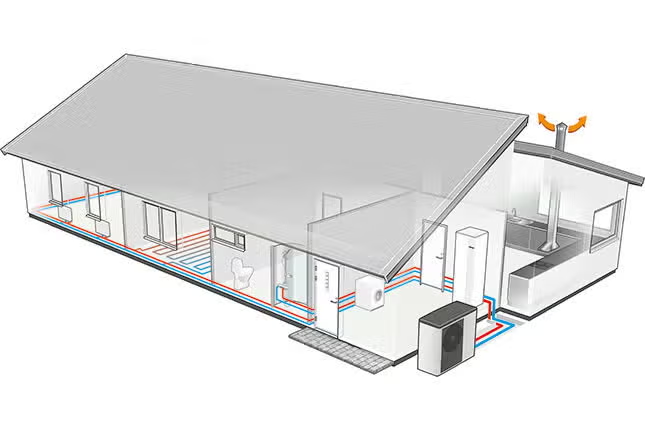
The outdoor unit collects heat using a refrigerant circuit. An electrically powered compressor raises the refrigerant’s temperature, and a heat exchanger transfers the heat to water. This water supplies radiators or underfloor heating and transfers heat to the household’s hot water cylinder.
The water circulating through the heating system is separate from the domestic hot water used for showers and taps. In the cylinder, heat passes between them through a heat exchanger.
The indoor setup varies between installations, using either an integrated indoor module or separate control and hot water components.
Warmth from cold outdoor air
Outdoor air still contains thermal energy when temperatures fall below freezing. In heating mode, the refrigerant enters the outdoor heat exchanger at a lower temperature than the surrounding air. This temperature difference allows it to absorb heat.
The compressor then uses electricity to raise the refrigerant’s pressure and temperature. Because the system collects outdoor heat as well as using electricity, it delivers more heat energy than the electrical energy needed to run it.
In cold, humid weather, frost may form on the outdoor heat exchanger. Controlled defrost cycles remove it so that heat transfer continues. Defrosting is a normal part of winter operation.
The heating process in four steps
- Step 1: Heat is collected outdoors. A fan moves air across the outdoor heat exchanger. The refrigerant absorbs heat from the air and evaporates into a gas.
- Step 2: The temperature rises. The compressor increases the gas pressure, raising its temperature so that heat is ready to be transferred to the water-based system.
- Step 3: Heat reaches the water. In a heat exchanger, the refrigerant releases heat to the water and condenses back into a liquid. The heated water supplies the heating system or transfers heat to the hot water cylinder.
- Step 4: The cycle begins again. The refrigerant passes through an expansion valve, reducing its pressure and temperature. It is then ready to absorb more heat from the outdoor air.
Where air-to-water heating works best
Air-to-water heat pumps work with water-based heating systems, such as radiators and underfloor heating. They are suitable for both new homes and many existing properties, with the installation designed around the building’s heating and hot water needs.
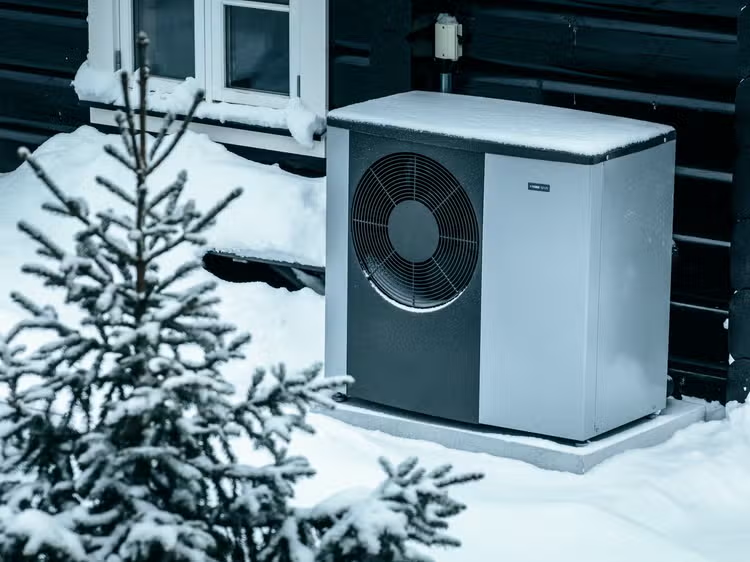
The outdoor unit uses air as its heat source, so there is no need for a borehole or buried ground collector.
An air-to-water heat pump is worth considering if you:
- Have radiators or water-based underfloor heating, or plan to install them
- Want to replace an oil or gas boiler or an older heat pump
- Want an outdoor heat source without drilling for a borehole
- Want heating and hot water from the same system
- Want the option of cooling with a compatible heat pump and distribution system
Existing radiators often remain in use. Their heat output at the planned water temperature needs to match each room’s heat loss. Lower flow temperatures support higher efficiency, so the installer checks whether the existing radiators provide enough warmth or need adjustment.
A radiator that feels cooler than it did with a boiler may still keep the room at the intended temperature. Heat pumps typically operate for longer periods with lower water temperatures, providing steady warmth.
For homes with direct electric heating, installing water-based distribution also needs to form part of the plan.
What to expect from an air-to-water system
An installation planned around your home
An installation planned around your home
A successful installation starts with an assessment of the building’s heat demand, the hot water requirements and the performance of the heating system. The heat pump is selected to provide the capacity needed in local winter conditions.
The outdoor unit needs unobstructed airflow and a suitable mounting position, with consideration for operating sound and drainage. Inside, the system connects to the heating circuits and the components used for hot water production.
During commissioning, the installer checks water flow and adjusts the controls to suit your home. This includes setting the heating curve, which determines how the water temperature responds to changes in the weather.
SCOP is a standardised measure of heating efficiency across a season. It allows systems to be compared at stated climate and water-temperature conditions. Actual heating costs also depend on your home’s demand, the installation and your electricity tariff.
Plan ahead for additional functions
Discuss plans for cooling, solar panels and connected control when the installation is designed, even if some functions will be added later.
More from your air-to-water system
Depending on the heat pump and system design, additional functions extend what the installation offers. Explore the options for summer comfort, solar electricity and intelligent control.
Cooling
A compatible heat pump can provide cooling through a water-based distribution system, such as underfloor loops or fan coils. The water absorbs heat from the rooms, and the heat pump releases it outdoors. Suitable components and temperature control help reduce the risk of condensation.
Solar panels
Solar panels generate electricity for your home, including your heat pump. Using solar electricity when it is available can reduce how much electricity you need to buy from the grid. The benefit depends on when your panels produce electricity and when your household uses it.
Intelligent control
NIBE Sense brings together smart functions and services that help your heat pump respond to your home’s needs. Depending on the model, compatible systems can adjust operation using outdoor conditions or changing electricity prices. Your settings determine how price-based control balances comfort and cost.