Borehole drilling – how it works
In brief:
- The drilling is completed quickly. The actual drilling usually takes one to two days.
- A permit is required. You will normally need written approval from your local authority before the work can begin.
- Limited impact on your garden. The borehole is narrow, and most traces in the garden disappear relatively quickly after the installation.
- The drilling depth is adapted to your needs. The required depth depends, among other things, on the energy requirements of the house and the conditions on the property.
How the borehole works
A borehole is a narrow, deep hole drilled into the bedrock. A collector pipe filled with fluid is placed inside it to collect energy from the rock. The energy is then used by the heat pump to heat the house.
A borehole for a ground source heat pump is approximately 110–140 millimetres in diameter. The depth is normally around 70–200 metres, depending on the energy requirements of the house and the properties of the bedrock.
It is completely normal for groundwater to be present in the borehole. In fact, it helps transfer energy from the bedrock to the collector pipe.
Since the borehole and collector pipe have a long service life, often up to 50 years and they can in many cases continue to be used when it is time to replace the heat pump.
The ground source drilling process
Ground source drilling is carried out by a professional drilling contractor using a specialised drilling rig. Although the machinery is large, the work itself is usually straightforward and can normally be completed in one to two days. Drilling does generate some noise, so this is worth bearing in mind if you or your neighbours are at home during the day.
Did you know that you can also get cooling from the borehole?
Drilling for a ground source heat pump – step by step
- Step 1: The drilling site is prepared. The drilling rig is positioned at the selected location and prepared for drilling.
- Step 2: Drilling down to the bedrock. The contractor first drills through the soil layers until reaching solid bedrock. Steel casing pipes are then installed to protect the borehole through the soil layers and prevent soil and surface water from entering.
- Step 3: Drilling into the bedrock. The hole is then drilled further down into the bedrock to the calculated depth.
- Step 4: Installing the collector pipe. Once the borehole is complete, the collector pipe is lowered into it. The pipe is then routed through a trench to the house foundation and connected to the heat pump indoors.
How the required drilling depth is calculated
The required borehole depth depends on several factors, including the energy requirements and the conditions of the bedrock. The exact depth is calculated by your installer.
Since it is primarily the part of the borehole below the groundwater level that contributes energy, drilling may sometimes need to go deeper than the home's energy demand alone would indicate.
Three factors mainly determine how deep the borehole needs to be:
- The type of bedrock. Different rock types conduct and store heat differently, affecting the required drilling depth.
- The home's total energy demand. A house with high energy consumption requires more output from the heat pump, which in turn requires a deeper borehole.
- Heat pump size. Larger heat pumps typically require deeper boreholes to collect enough energy from the bedrock.
If the calculated depth exceeds 250 metres, it is common practice to drill two shallower boreholes instead. They must then be positioned far enough apart to prevent them from affecting each other's energy supply.
Access and logistics for the drilling rig
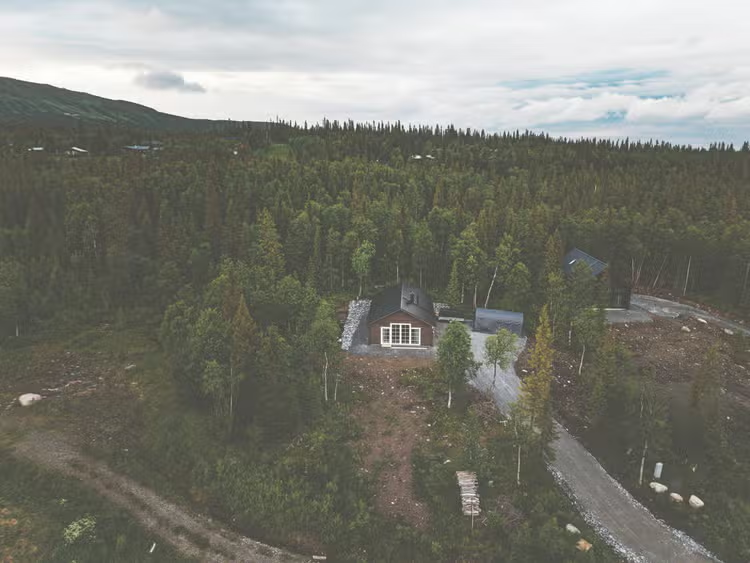
Before drilling begins, the installer or drilling contractor will assess the property's conditions. To ensure safe and efficient work, the drilling rig needs sufficient access and a surface capable of supporting its weight.
What the installer will usually check
- Clear access width. The entrance and access route to the drilling site need to have a clear width of at least 1.5–2 metres.
- Ground conditions. The ground must be able to support the weight of the drilling rig. Sensitive lawns, paving or soft ground may need to be protected during the work.
- Working area. Several metres of free space are needed around the drilling site for the additional equipment used during the work.
How drilling affects your garden
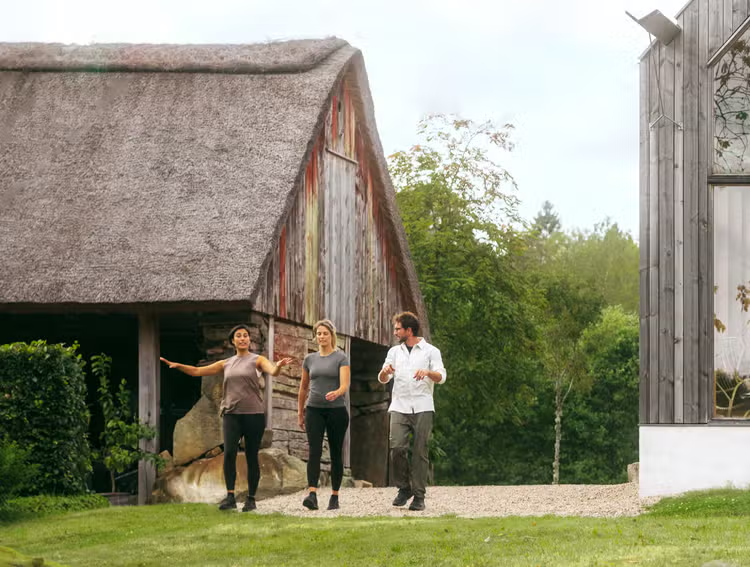
A common concern is that drilling will cause significant disruption to the garden, but the impact is usually less than many people expect. The borehole itself is narrow, and once the work is complete it is sealed with a well cap that can be installed below ground level and hidden beneath a lawn or flower bed.
During drilling, there will be some noise and temporary traces from equipment and transport vehicles. Once the work is complete, the area is restored and, in most cases, the lawn recovers within a single growing season.