Replacing a gas boiler with a heat pump
A heat pump for a terraced house with limited outdoor space
When the Struckmann family began looking for an alternative to gas heating, they wanted a solution that would make their house more future-ready.
Built in 1958, the 111 m² terraced house was heated by a gas boiler installed in 2004. The family’s previous gas consumption was around 16,000 kWh per year.
Rising gas prices and costs linked to carbon emissions prompted the couple to rethink their heating system. With support from an energy adviser, they developed a renovation plan that included replacing the gas boiler with a heat pump.
Location: Langenhagen in Niedersachsen, Germany.
Previous heating system: Gas boiler installed in 2004. Previous gas consumption: 16,000 kWh per year.
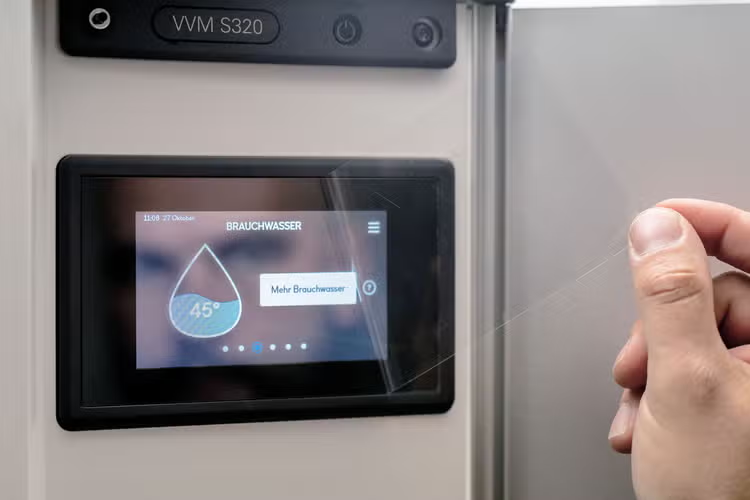
New system: NIBE S2125-8 air-to-water heat pump with a NIBE VVM S320 indoor module and integrated 180-litre hot water cylinder.
Result: The house was upgraded to the German KfW 85 energy efficiency standard. The outdoor unit was installed closer to the property boundary after the family reached an agreement with their neighbour.
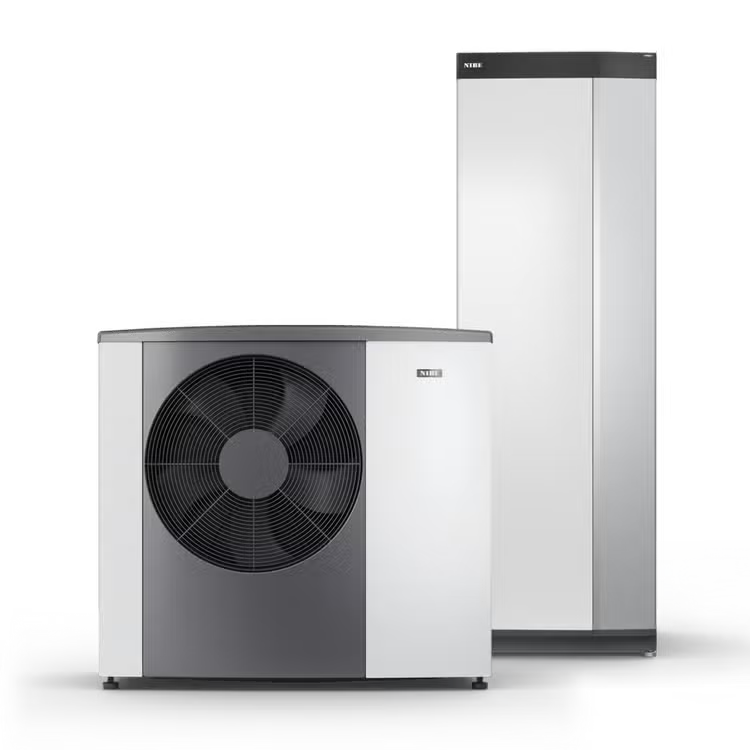
Air-to-water heat pump
S2125
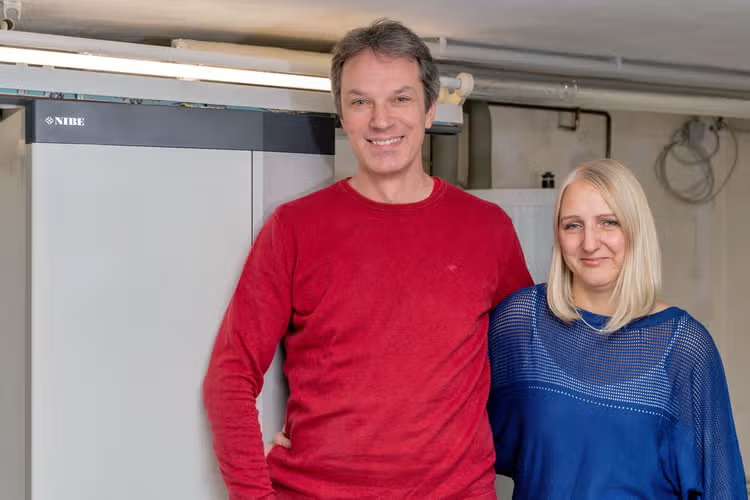
Making space for a heat pump
The family wanted to move away from fossil fuels and prepare their house for the future. Their energy adviser recommended a renovation plan that included façade insulation and replacing selected windows. Some radiators also needed to be replaced to improve heat distribution.
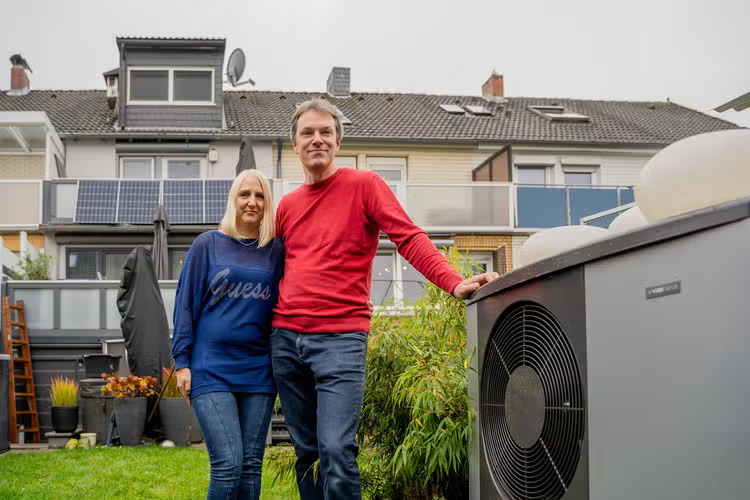
The five-metre-wide plot presented a particular challenge. Under the region's building regulations, the outdoor unit had to be set back three metres from the neighbouring property. The family therefore needed to find a suitable location with their neighbour and make sure the heat pump would not cause a noise disturbance.
Choosing the right system for the house
After researching heat pump options, the Struckmann family chose a NIBE S2125-8 air-to-water heat pump with a NIBE VVM S320 indoor module and integrated 180-litre hot water cylinder. They agreed with their neighbour that the outdoor unit could be placed closer to the boundary, making the installation possible despite the limited space.
The house also has a small photovoltaic system on the balcony, which generates around 1,000 kWh of electricity per year for household use. There was not enough space on the roof for additional solar panels.
A future-ready house and a smooth installation
The heat pump was part of a wider renovation that included façade insulation and updates to selected windows and radiators. The family’s energy adviser calculated that the investment could be offset by lower gas payments, costs linked to carbon emissions and the removal of chimney-sweeping fees.
The installation took place in stages. The outdoor unit was installed in August, and the indoor module was connected in October. During the work, the installer made sure the family continued to have hot water. When the gas boiler had to be taken out of service during the work, the installer provided a temporary instantaneous water heater.