A heating upgrade designed for the future
Less reliance on gas with a heat pump and solar panels
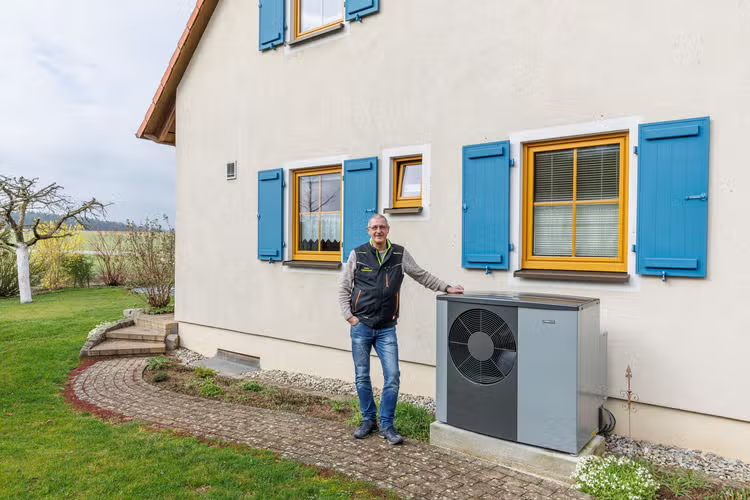
When the Frickinger couple wanted to reduce their dependence on gas, they began exploring alternative ways to heat their home in Mönchsroth, a small village in Bavaria, Germany.
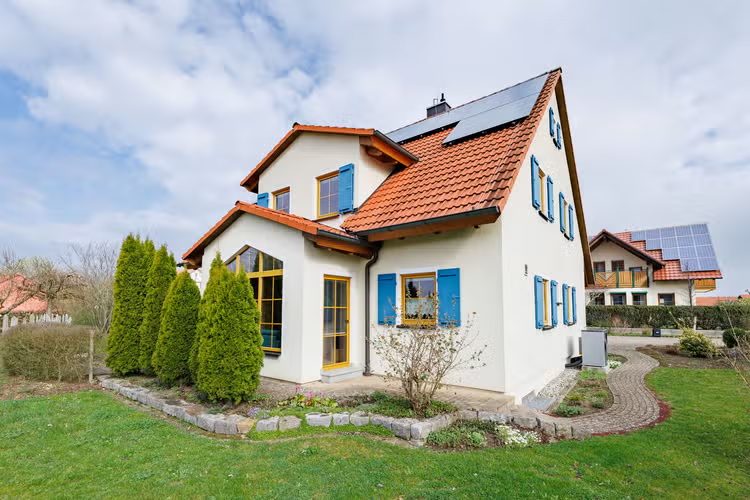
Built in 2003, the 150 m² timber-framed house was heated by a gas boiler that provided both heating and domestic hot water. The system was supported by solar thermal collectors installed on the south-facing roof. Heat was distributed throughout the home using a combination of radiators and underfloor heating, providing comfort for the two-person household.
While the existing heating system was still functioning, the homeowners wanted a more future-ready solution that would make better use of renewable energy and help shield them from rising energy costs.
Location: Mönchsroth in Bavaria, Germany.
Previous heating system: Gas heating with solar thermal support.
New system: NIBE S2125-12 air-to-water heat pump with NIBE VVM 310.
Additional energy source: Solar PV and battery storage.
Result: Up to 45 % self-sufficiency, greater energy-independence and retention of existing radiators and underfloor heating.
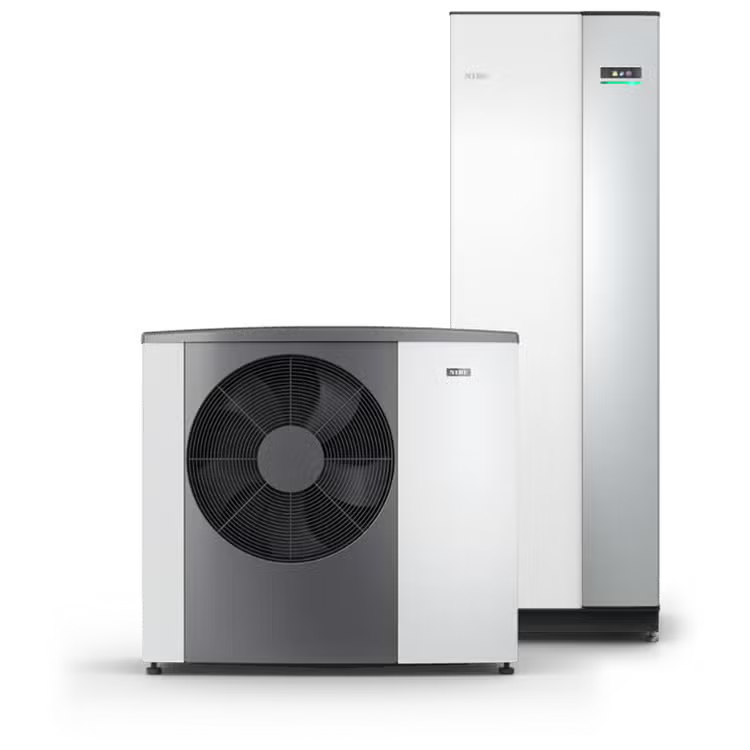
Air-to-water
S2125 and VVM 310
Reducing reliance on gas
Uncertainty around gas supplies, rising gas prices and costs linked to carbon emissions prompted the Frickinger family to explore alternative heating solutions. While the existing system was still operational, the couple wanted a more future-ready solution that would reduce dependence on fossil fuels and increase energy self-sufficiency.
Their goal was not only to reduce dependence on fossil fuels, but also to increase energy self-sufficiency and make greater use of renewable energy. With energy costs becoming less predictable, they wanted a heating system that would offer greater stability and help future-proof their home.
Combining a heat pump, solar panels and battery storage
The chosen solution was a NIBE S2125-12 air-to-water heat pump combined with the NIBE VVM 310 indoor module.
A 10 kW solar PV system was installed to generate electricity for the household, while an 11.6 kWh battery storage system helps maximise the use of self-generated solar power.
As the property was built in 2003, the building envelope, windows and doors already met a good energy standard. Following hydraulic balancing of the heating system, the existing radiators and underfloor heating could remain in place, avoiding the need for major modifications.
More independence and a future-ready energy system
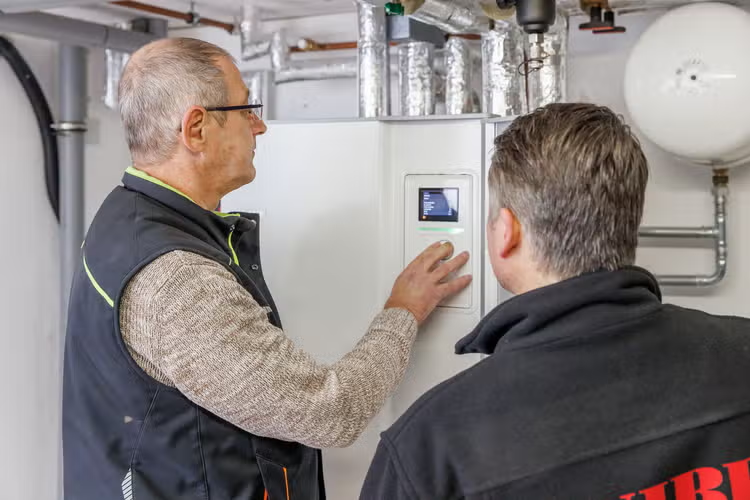
The new heating system was installed in August and quickly delivered positive results. According to monitoring data from the solar PV system, the home's self-sufficiency rate reached 45% during the remainder of the first year of operation. During the first months of the following year, the figure remained at 44%, with further improvements expected during the sunnier summer months.
The installation also freed up valuable space in the basement. By replacing the gas boiler, solar thermal equipment and associated components, the homeowners gained additional storage space, as the compact indoor module and battery storage system require significantly less floor area.
Another positive outcome was that the existing radiators and underfloor heating could remain in place. Following hydraulic balancing of the heating system, no major modifications to the home's heat distribution system were required.