Smart Room Comfort – heating that adapts to your home
In brief:
- Smart Room Comfort uses indoor temperature measurements. Compatible room sensors give the heat pump information about the temperature inside your home, alongside outdoor conditions.
- It learns how your home responds to changes. SRC takes factors such as sunlight, wind and changing weather into account.
- Heating adjusts towards your chosen temperature. This can help reduce temperature fluctuations and the need for manual adjustments.

What is Smart Room Comfort?
A heating system normally uses the outdoor temperature as an important part of deciding how much heat the house needs. But outdoor temperature alone cannot tell the whole story. Sunlight can warm a room even on a cold day. Wind can make a house lose heat more quickly. Some buildings retain heat for a long time, while others react much faster when conditions change.
Smart Room Comfort adds information from inside the home. With a compatible room sensor, SRC can compare the temperature you want with the temperature you actually have. Over time, it learns how the home responds and adjusts the heating based on what is happening both indoors and outside. Instead of relying only on a general relationship between outdoor temperature and heating demand, the heat pump gets a better picture of how your particular home behaves.
How does Smart Room Comfort learn your home?
Every home responds differently to changes in weather and heating. Some warm up quickly and cool down just as fast. Others retain heat for many hours.
Smart Room Comfort learns these patterns by combining indoor temperature measurements with predictive control. A room sensor shows what is happening inside the home, while weather forecast data helps the system anticipate what is likely to happen next.
Over time, SRC learns how quickly your home gains and loses heat. This allows the heat pump to adjust earlier and more precisely, rather than waiting until the indoor temperature has already moved too far.
It also means the system can respond to conditions that affect comfort in everyday life. Sunlight through the windows, wind, rapid weather changes and heat from people or appliances can all influence the indoor temperature, even when the outdoor temperature itself has barely changed.
By taking these effects into account, SRC can reduce unnecessary peaks and dips and help maintain a more even indoor climate with less manual adjustment.
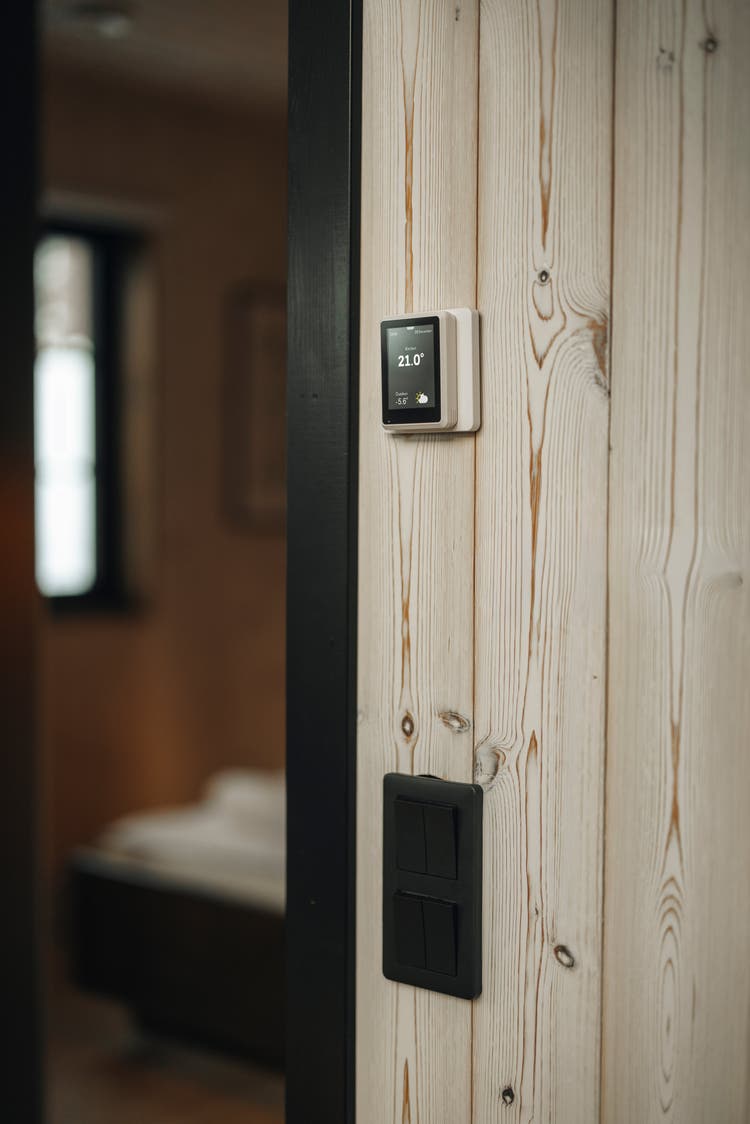
Why does the indoor temperature matter?
Outdoor temperature tells the heat pump what conditions are like outside. The room sensor shows what those conditions are actually doing to the home.
Take two winter days with the same outdoor temperature. One may be grey and still, while the other brings strong sunshine through large windows. The amount of heating needed indoors can be quite different.
The same applies when the weather changes quickly. A house does not instantly become colder because the outdoor temperature has fallen. It may retain enough heat for several hours.
By measuring the temperature indoors, Smart Room Comfort can see the result rather than relying only on what is happening outside. That helps avoid situations where the heating continues at the same level even though the home is already warm enough, or reacts too late when more heat is needed.
More even comfort with less to adjust
Heating curves are used to tell a heating system how much heat to provide at different outdoor temperatures. A well-adjusted heating curve gives a good basis for controlling the home, but it may need some fine-tuning as conditions change. With Smart Room Comfort the need for manual adjustment is reduced.
You set the indoor temperature you want, and SRC uses information from the room sensors together with what it has learned about the home to adjust the heating towards that temperature. The underlying heating system still needs to be correctly set up. SRC does not remove the basic control of the heat pump. It adds another layer of information that allows the system to adapt more closely to the actual conditions indoors. For you as a homeowner, that means less time spent adjusting technical settings when the weather or seasons change.
Smart Room Comfort needs information about the indoor temperature. This is provided by compatible room sensors placed in the home. Your installer is ready to help you find the right setup and number of sensors needed for your home.

Can Smart Room Comfort reduce energy use?
The main purpose of SRM is better temperature control. More accurate control can help avoid unnecessary heating. If sunlight has already warmed the home, for example, there is little benefit in continuing to supply the same amount of heat simply because the outdoor temperature has not changed.
Similarly, reacting earlier to changes in the home can reduce the need for larger corrections later. How much this affects energy use varies from one home to another. It depends on the building, the heating system, previous settings and the indoor temperature you choose.
For this reason, there is no single energy-saving figure that applies to every home. The benefit of SRC is that the heat pump can respond more closely to the conditions that actually exist indoors.

Smart Room Comfort is part of NIBE Sense
NIBE Sense is the intelligence in connected NIBE heat pumps. It helps the system use information about the home and its surroundings to adapt operation automatically.
Smart Room Comfort focuses on indoor climate. It gives the heat pump information about the actual room temperature and helps it learn how the building responds.
Other Sense functions use different information. Smart Price Adaption, for example, allows changing electricity prices to influence when some heating and hot water production takes place. Each function has a specific role. Together, they give the heat pump a broader understanding of the conditions it is working with.
What do I need to use Smart Room Comfort?
To use Smart Room Comfort, you need a compatible NIBE heat pump connected to the internet and at least one compatible NIBE room sensor.
The sensor should be installed in a suitable location where it can give a representative reading of the indoor temperature. If the home has several floors, climate zones or areas with very different conditions, additional sensors may be useful. Available functionality varies between NIBE models, system configurations and markets. Check what applies to your heat pump, or ask your NIBE installer to recommend a suitable setup.
Once Smart Room Comfort is activated, the system begins using the indoor temperature and learning how your home responds to temperature changes.