How air-to-air heat pumps work
An air-to-air heat pump uses energy from the outdoor air to warm your rooms. In summer, it reverses the process to take heat out of your home. Heating and cooling are delivered directly to indoor air, making it a practical option for homes without water-based heating.
In this article, we'll explain how the technology works step by step, when an air-to-air heat pump is the right choice, and what to consider before installation.
In brief:
- Uses energy already present outdoors. Outdoor air contains usable heat even below freezing.
- Raises the temperature through compression. An electrically powered compressor increases the refrigerant’s pressure and temperature.
- Delivers warmth directly to room air. Indoor units circulate air across a heat exchanger.
- Reverses the process for cooling. Heat is removed from indoor air and released outside.
Warmth and cool air from one system
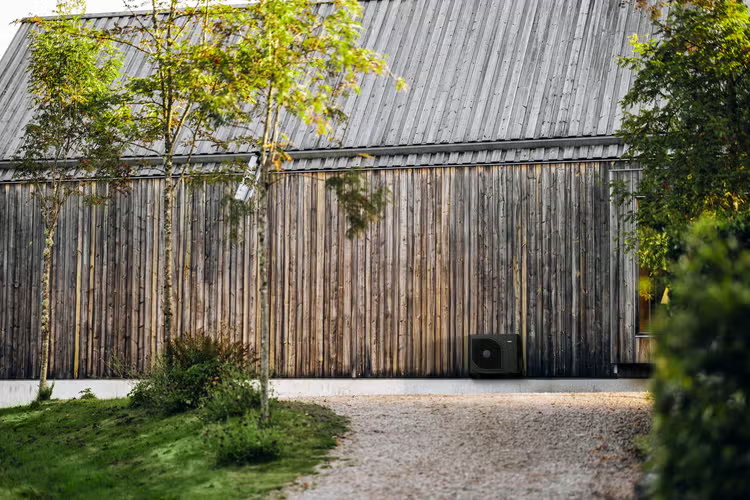
A typical air-to-air system consists of an outdoor unit and one or more indoor units connected by refrigerant pipes. The refrigerant carries heat between them. In heating mode, it collects heat outdoors and releases it indoors. In cooling mode, the direction of heat transfer is reversed.
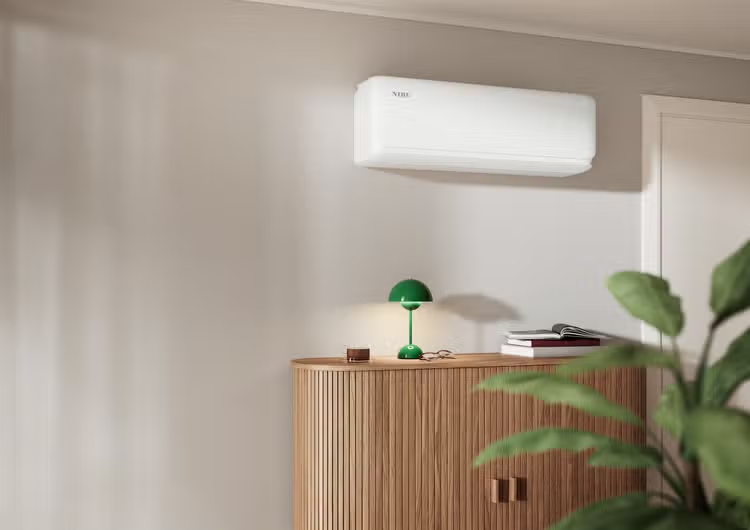
The indoor unit uses a heat exchanger and fan to warm or cool the air circulating through the room. It recirculates indoor air rather than bringing fresh air into the building.
Unlike an air-to-water heat pump, it does not supply radiators, water-based underfloor heating or domestic hot water. Your household’s hot water therefore needs a separate solution.
From outdoor energy to indoor warmth
Outdoor air contains thermal energy even when temperatures fall below freezing. An air-to-air heat pump uses electricity to collect this heat and raise its temperature. Moving heat in this way is the basis of its efficiency compared with direct electric heating.
The refrigerant circulates in a closed circuit. As it travels between the outdoor and indoor units, changes in pressure and temperature allow it to absorb heat in one place and release it in another.
In cold, humid conditions, frost may form on the outdoor heat exchanger. Defrost cycles remove it so that heat transfer continues.
The heating process in three steps
-
- Step 1: Heat is collected outdoors. A fan moves outdoor air across a heat exchanger. The refrigerant absorbs heat from the air and evaporates into a gas.
- Step 2: The temperature rises. The compressor increases the gas pressure, raising its temperature so that heat is ready to be released indoors.
- Step 3: Warmth reaches the room. The refrigerant releases heat through the indoor heat exchanger and condenses back into a liquid. A fan circulates the warmed room air. The refrigerant’s pressure is then reduced, ready for the cycle to begin again.
Where air-to-air heating works best
Air-to-air heat pumps are a practical option for homes without water-based heating. They also work alongside other heating systems, reducing the amount of heat those systems need to supply.
Because warmth travels with the airflow, room layout matters. Open spaces allow it to spread more freely, while closed doors and separate rooms limit how far it reaches.
An air-to-air heat pump is worth considering if you:
- Have direct electric heating and want to reduce heating costs
- Want to supplement an existing heating system
- Have an open-plan layout where air circulates between living spaces
- Want heating and summer cooling from the same system
- Have, or plan to install, a separate hot water solution
A single indoor unit may not provide enough warmth for every room. Homes with many separate rooms need careful assessment of coverage, unit placement and additional heating.
Whether the heat pump supplies most of your heating or supports another system depends on the model, local climate and your home’s heating needs.
What to expect from an air-to-air system
Good placement for comfort and efficiency
Installation usually involves less work than systems requiring ground collectors or new water-based heating circuits. An installer connects the outdoor unit to one or more indoor units and selects their positions to suit the building.
Placement affects both system performance and everyday comfort:
- Indoor unit: Choose a position that allows air to circulate through the intended living spaces. Airflow should reach the areas being heated or cooled without blowing directly onto beds or seating.
- Outdoor unit: Allow unobstructed airflow and use a stable mounting position. Placement also needs to account for operating sound and water released during defrosting.
Correct sizing is equally important. The installer assesses your home’s heating and cooling needs, the capacity available in local winter conditions and how the indoor units will serve the rooms.
SCOP describes seasonal heating efficiency, while SEER describes seasonal cooling efficiency. These figures use standardised conditions to compare systems. Actual electricity use also depends on the weather, installation and how you use the system.